AI · Systems · Full-stack

From scratch
to scalable
digital systems.

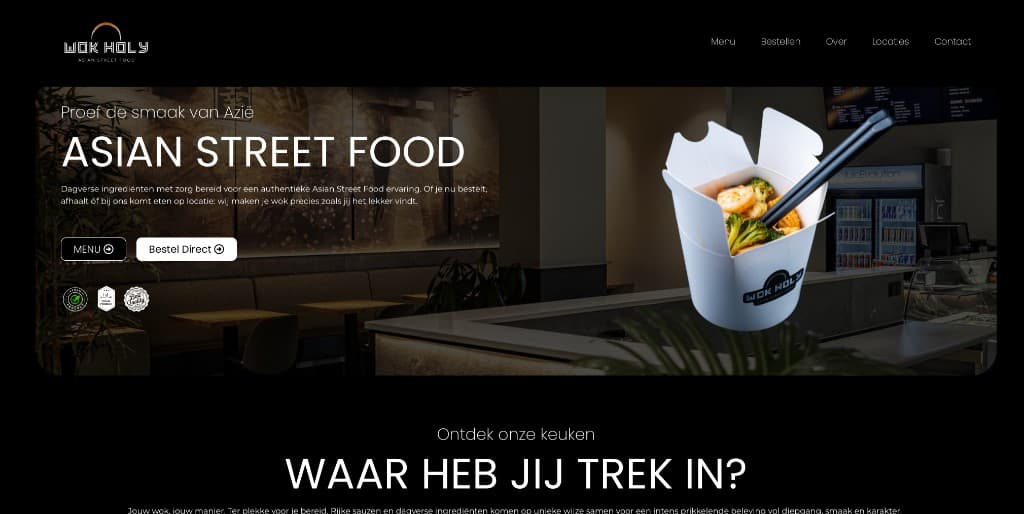
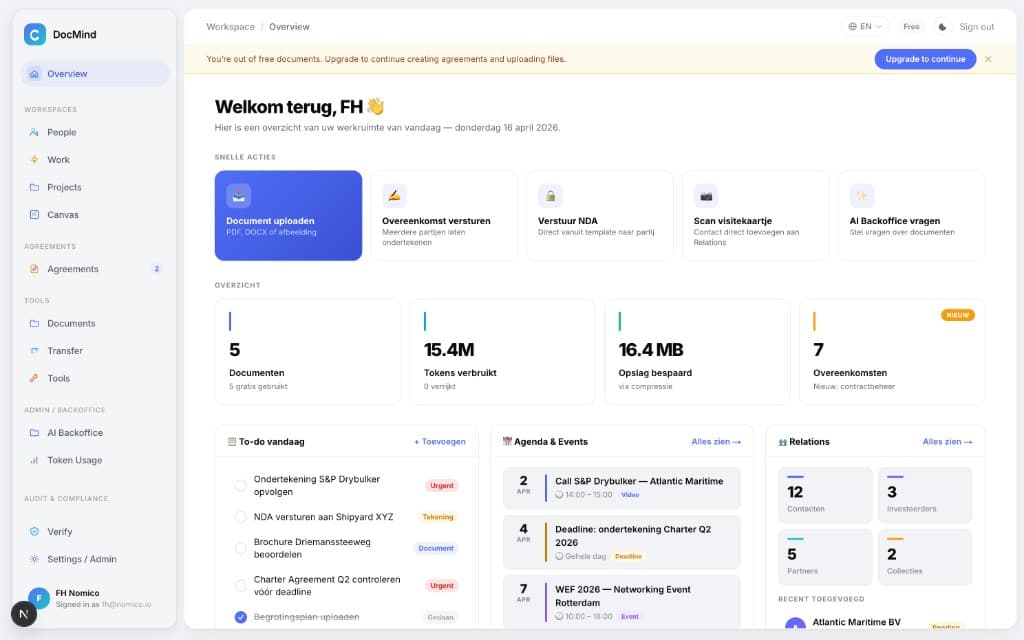
We work with companies on real products: clarifying the problem, tightening UX, shipping a design system if it helps, then building in production code. Research only where it earns its place.

5+Patent applications
~72%Token reduction
200+Design tokens built
4IAM user roles
End-to-endDelivery model

Core capabilities

Five disciplines.
One integrated system.

You get the people the work actually needs—strategy, design, and engineering in one loop, not three vendors passing PDFs.

AI Transformation

Build AI-ready products that actually work.

With our team of specialists, we help organizations move from AI interest to AI execution — designing systems that integrate intelligence without creating unnecessary complexity. From workflow automation to agent architecture, we translate AI capability into structured product logic.

UX Simplification

Reduce complexity. Increase adoption.

Complex systems fail when their interfaces fail. We design product experiences that strip away cognitive load — turning dense, confusing workflows into clear, learnable paths. This is not decoration. It is structural clarity.

Design Systems

One system. Every surface. Zero drift.

A design system is not a component library. It is a product decision — defining how your brand, logic, and quality scale across every touchpoint. We build systems from token architecture to production components, built to last.

Full-Stack Execution

From system design to production deployment.

We build complete digital products — not just interfaces. From database schema to React component to deployment pipeline, we execute full-stack systems with precision, using modern tooling and scalable architecture patterns.

Secure Product Architecture

Security designed in — not bolted on.

Secure systems require security thinking from the first diagram. We architect products with access control, data protection, and threat modeling built into the foundation — particularly for AI-powered systems where the attack surface is expanding.

Selected work

Built from scratch.
Owned until it ships.

View all work

Research & innovation

Applied research.
Not theoretical.

5 patent applicationsActive research

Everything here is tagged: what we proved in the lab, what we measured in the wild, and what is still a hunch.

View all research

Token Optimization Research

Researched

Systematic research into reducing token consumption in large language model pipelines — through prompt restructuring, input compression, and context management strategies.

  • ~72% reduction in token input achieved in controlled experiments
  • Further optimization potential estimated at 85–92% under structured conditions
  • Focus areas: prompt structuring, redundancy elimination, and dynamic context pruning
  • Results are evidence-based from controlled test environments — not generalized claims
LLMsPrompt EngineeringEfficiencyCost Optimization

AI Security Research

Researched

Research into securing AI system pipelines against adversarial input, prompt injection, and malicious manipulation — with a focus on production-grade AI agent architectures.

  • Threat modeling for AI agent input pipelines
  • Prompt injection mitigation strategies and pattern libraries
  • Input sanitization and validation frameworks for LLM workflows
  • Secure AI-agent architecture design with isolation and audit layers
  • Malware-resistance patterns for AI-assisted code execution environments
AI SecurityPrompt InjectionAgent ArchitectureCybersecurity

Experimental Storage Reduction Research

Experimental

An early-stage thesis exploring extreme visual data compression — investigating whether high-resolution images can be reduced to minimal storage sizes while preserving perceptual quality through intelligent reconstruction.

  • Conceptual framework: 4K image → ~50KB storage → reconstructed into visually usable output
  • Explores signal-based reconstruction rather than traditional lossy compression
  • Early experimental stage — not validated for production use
  • Research focus: identifying which visual information is perceptually essential vs. reconstructable
CompressionVisual SystemsExperimentalStorage

Stack & systems

Every layer of the stack.
Purpose-built.

Design

FigmaDesign tokensFramerPrototyping

Frontend

Next.jsReactTypeScriptTailwind CSSFramer Motion

Backend

SupabasePostgreSQLAPI designEdge functions

AI / LLM

OpenAIPrompt engineeringVector searchLangChain

Security

IAMRBACRLS policiesAudit logging

Systems

ArchitectureToken systemsComponent librariesMigrations

Industries

Sector experience.
Operations-heavy domains.

Most of our work sits in messy operations: logistics, shifts and bookings, hiring pipelines, anything with real volume and edge cases.

Food & Beverage

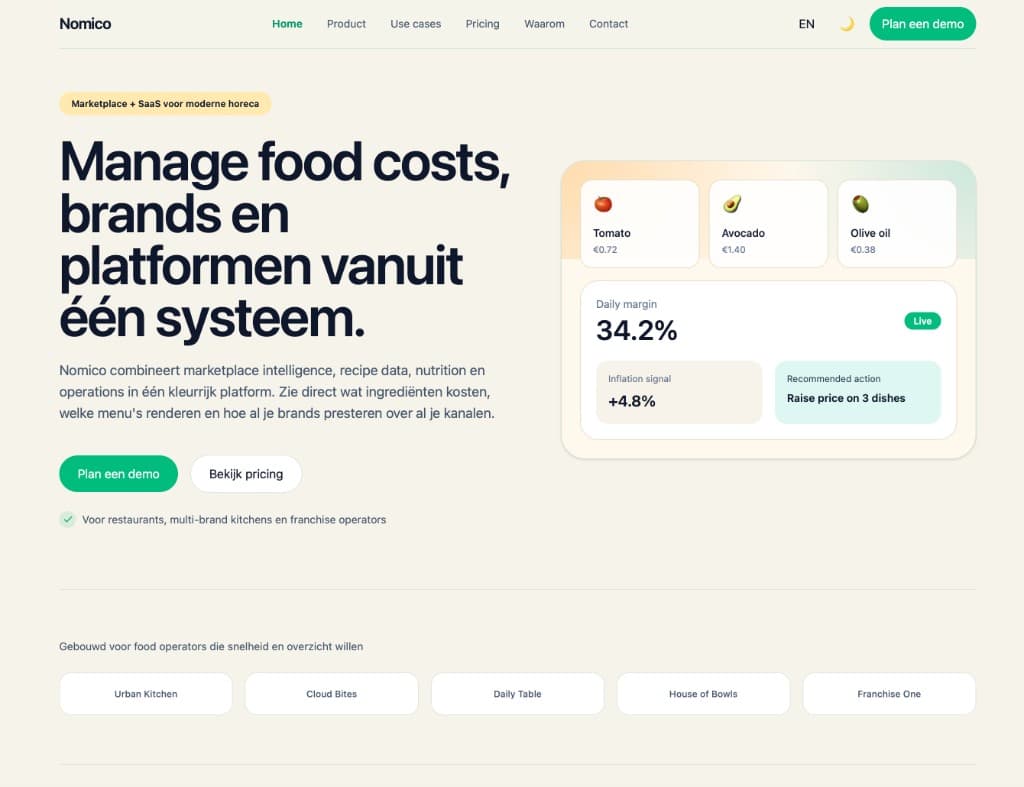
Brand, retail, and supply touchpoints

Hospitality

Guest journeys, staffing, and service design

Food delivery

Marketplace dynamics and operational clarity

Shipping

Tracking, exceptions, and carrier integrations

Freight forwarding

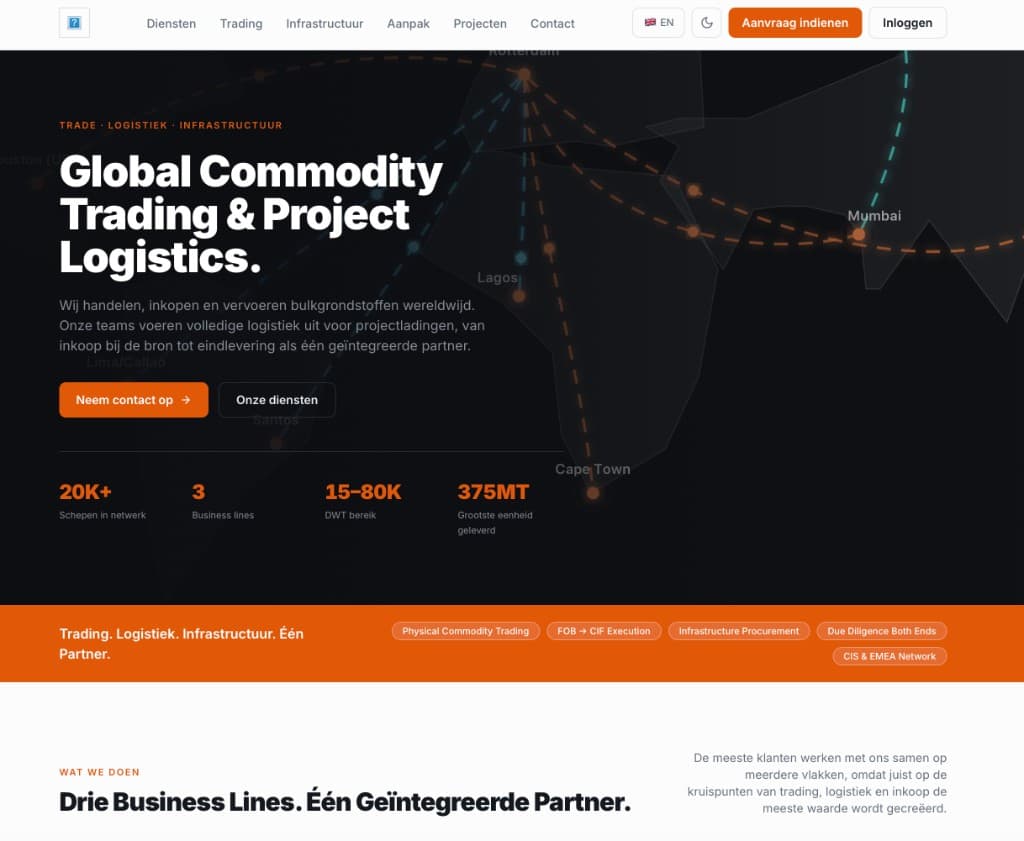
Documentation, customs, and multi-party workflows

Recruitment

ATS, pipelines, and decision support

How we work

Think it through.
Then build.

01

Understand the system

Who uses it, what breaks today, what must not break tomorrow. We map that before touching Figma or git.

02

Simplify the complexity

Strip the ask down to the job users are hiring the product for. Fewer steps beats more features.

03

Build the architecture

Data model, permissions, and integration points first. The UI is the last layer, not the first guess.

04

Deliver and transfer

Code you can run, components you can find, and a handoff your own team can continue without a rewrite.

Got a build that needs a serious team?

Send a short note on what you're making and where you're stuck. If we're not the right fit, we'll say so.